
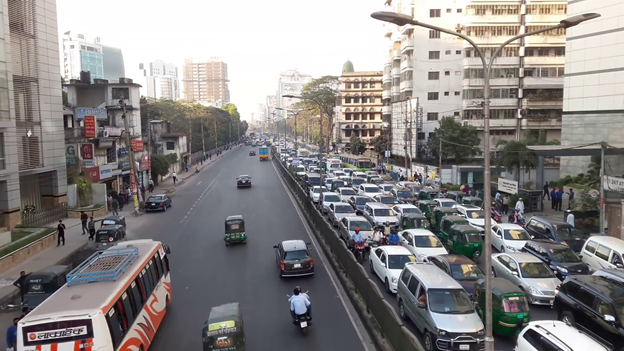
Kazakhstan's traffic congestion has drawn international attention after the country ranked 44th out of 89 nations in the mid-year Traffic Index 2025. With a Traffic Index score of 136.3, Kazakhstan sits between Canada and New Zealand in global comparisons, reflecting moderate but manageable congestion levels.
The Traffic Index 2025 measures commuting conditions based on travel time, inefficiency, and environmental impact. Kazakhstan’s average commuting time stands at approximately 35.8 minutes, while its Inefficiency Index reached 141.3 points. These figures place the country in the middle tier globally—far below the most congested nations, yet with clear room for improvement.
Compared to countries like Nigeria, Costa Rica, and Sri Lanka, where congestion levels exceed 250 points, Kazakhstan's traffic congestion appears significantly less severe. Meanwhile, European leaders such as Estonia, Austria, and Finland maintain congestion scores below 80, setting benchmarks for efficient urban mobility.
Environmental and Economic Impact
CO2 Emissions and Urban Pressure
Traffic congestion is not just about delayed commutes—it also affects air quality and productivity. Kazakhstan’s CO₂ emissions transport index was estimated at 3942.5, placing it in the lower half globally. This suggests a moderate environmental footprint compared to heavily congested developing economies.
However, rapid urbanization in cities like Almaty and Astana continues to increase road pressure. Rising vehicle ownership, expanding suburbs, and growing commercial activity contribute directly to Kazakhstan's traffic congestion levels.
Congestion also impacts fuel consumption, logistics efficiency, and daily business operations. Delays translate into higher operational costs for transport companies and reduced productivity for workers across multiple industries.
Smart City Kazakhstan: A Digital Solution
AI-Based Traffic Management
In response to these challenges, President Kassym-Jomart Tokayev has instructed the government to expand the Smart City Kazakhstan initiative to all major urban centers. The program integrates AI-powered traffic monitoring, adaptive traffic lights, and real-time data analytics to improve flow and reduce bottlenecks.
The national rollout, expected to accelerate through late 2025, aims to modernize urban mobility systems and address Kazakhstan traffic congestion proactively rather than reactively. By leveraging artificial intelligence and smart sensors, authorities hope to cut commuting times and improve public transport efficiency.
Technology-driven mobility reforms are also gaining attention in the automotive and transport media sector. Platforms like AsiaCarNews regularly highlight how smart infrastructure and connected vehicles are reshaping urban transportation trends across Central Asia.
Infrastructure and Long-Term Planning
Road Expansion and Public Transport
While digital solutions play a key role, physical infrastructure upgrades remain essential. Investments in road expansion, new bypass routes, and improved public transportation networks are part of broader urban mobility reforms.
Reducing reliance on private vehicles through enhanced bus corridors and future rail projects could significantly ease Kazakhstan's traffic congestion in densely populated cities. Integrated planning between housing development and transport networks will also be crucial to preventing future gridlock.
Looking Ahead
Although ranked 44th globally, Kazakhstan’s congestion level remains moderate compared to the world’s most affected nations. With Smart City Kazakhstan initiatives, infrastructure modernization, and AI-driven traffic systems, the country is positioning itself for smarter and more sustainable urban mobility.
What’s your experience with traffic in Kazakhstan? Do you think Smart City solutions will truly ease Kazakhstan's traffic congestion? Share your thoughts in the comments—your perspective matters.