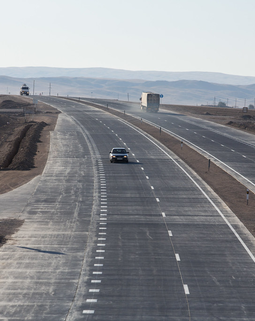

Kazakhstan, the largest economy in Central Asia, is leveraging its massive land area and strategic position to pivot away from its historical reliance on fossil fuels. The country’s commitment to Sustainable Infrastructure is now being tested by the rapid growth of its electric vehicle (EV) market, which has seen registrations soar. This presents a unique challenge: transforming a vast, intercity-focused road network, built for long-haul combustion engines, into a reliable EV Charging Corridor capable of sustaining long-distance electric travel.
The government has recognized that without a pervasive and reliable charging network, the EV transition risks stalling at the early-adopter stage. The solution is a strategic, multi-faceted approach to Road Network Electrification that addresses both urban density and rural connectivity.
The Intercity Challenge: Creating the EV Charging Corridor
Currently, EV adoption is highly concentrated in major metropolitan areas like Almaty and Astana (now Nur-Sultan). While these cities are seeing an influx of charging stations, the crucial gap lies along the thousands of kilometres of connecting highways. Filling this gap is the objective of the national roadmap for electric vehicle infrastructure, which aims to create the vital EV Charging Corridor necessary for Intercity Mobility.
A major regulatory milestone was achieved with the adoption of new construction norms mandating the inclusion of EV charging infrastructure in urban planning. Key provisions now require EV charging spaces at fuel stations, roadside service centers, public parking lots, and new residential and industrial developments. This push for density in cities is intended to free up existing urban charging points while standardizing infrastructure quality. Furthermore, the authorities are providing incentives and collaborating with domestic companies—like local manufacturers who are developing charging station technologies—to ensure the rapid and localized rollout of the Sustainable Infrastructure.
Tech, Policy, and the Future of Smart Transport
The ambition extends beyond simply building more stations; it is about building smart ones. Kazakhstan is actively exploring the integration of advanced Smart Transport technologies to optimize charging network performance. This includes the use of real-time data analytics to forecast demand, especially along major trade routes, which could also be used to improve general logistics efficiency, as seen on industry platforms like https://auto24.africa/.
However, a key challenge is the nation's aging power grid. To mitigate the strain of rapid EV expansion, particularly in remote regions, the government is promoting solar-powered charging infrastructure and is exploring decentralized renewable integration. This aligns perfectly with the broader objectives of the Kazakhstan Green Economy transition. The focus is on a coordinated strategy: incentivizing private investment through public-private partnerships, offering subsidies for installations in commercially challenging rural areas, and establishing open standards to ensure that all charging equipment—whether locally made or imported—is compatible.
By focusing on a coherent, geographically balanced strategy that turns its vast road network into a robust EV Charging Corridor, Kazakhstan is demonstrating its long-term commitment to Sustainable Infrastructure, ensuring the EV revolution is accessible to all its citizens, regardless of their location.
If you were a long-distance EV driver in Kazakhstan, which would give you more confidence to make a long journey: a government guarantee of a charging station every 100km or a mobile app that guarantees 100% charging point uptime and real-time availability? Share your thoughts on the most important factor for Intercity Mobility below!